You just shoveled your driveway, knocked the snow off the eaves of your roof, and thought, “Nice! My roof survived.”
Then a few days later — drip… drip… drip… from the bathroom ceiling. Ugh. If you live along Colorado’s Front Range (like Longmont, Boulder, Ft. Collins, Loveland, Denver suburbs, and beyond), you know how the weather can swing: heavy snow, wild high winds, and sudden rain. And your roof? It takes the direct hits.
Not all leaks are the dramatic “water pouring in” type. Some are a bit more “stealthy” — they sneak in after the snow melts, after ice sneaks up under your shingles, or when wind pushes blowing rain or snow sideways up into vents at strange angles. Those sneaky leaks can often start at odd places, like around a roof vent — say, a bathroom vent — or a skylight, and before you know it, you’ve got water damage, musty odors, or even mold starting to set in. Even here on the Colorado Front Range.
Most roof leaks don’t show up during the storm. They reveal themselves days later — usually right when you least want them. This is when leaks often develop around:
- roof vents
- bathroom fan vents
- plumbing stacks
- skylights
- chimneys
- flashing
- HVAC stacks
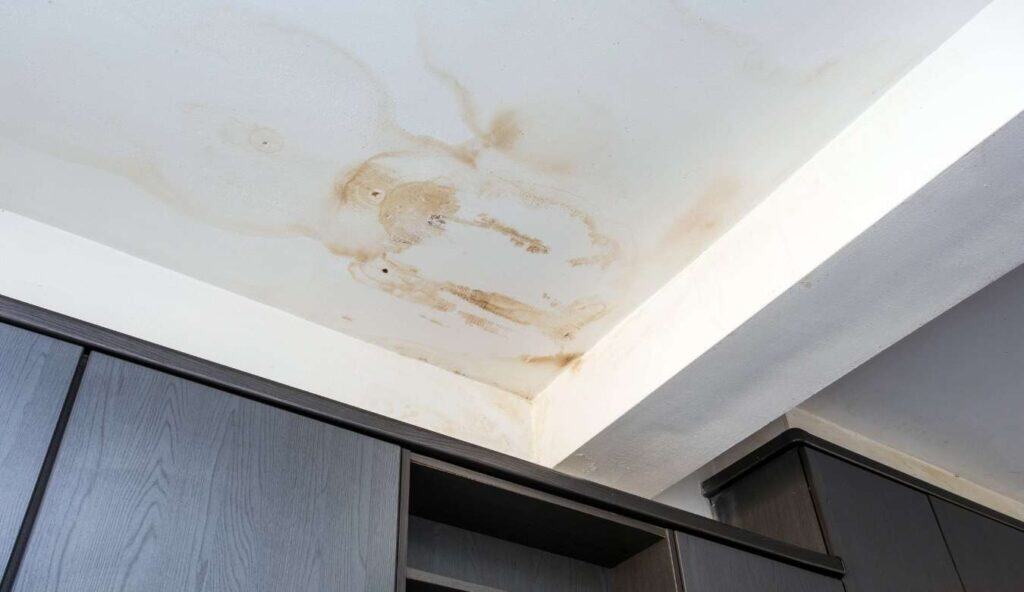
You walk into the bathroom, glance up, and see it:
A brown stain. A drip. A sagging patch in the ceiling.
Congratulations… you may have a post-storm roof leak.
Let’s walk through what can cause those leaks, how wind and snow can turn a vent or even the slightest hole in the underlayment can seep into a water inlet, and what you can do to avoid an unwelcome soggy surprise.
Why Roofs Leak After a Snow or Rainstorm
Worn, damaged, or missing shingles
Your shingles are the first line of defense. But Colorado weather — hail, heavy rain, snow, wind — can crack, lift, or even rip off shingles. Most of the time, you should be fine. The underlayment beneath the shingles is really what waterproofs your roof. But, when the unexpected happens, water has a direct path under the protective layer and into the roof deck and then into your attic and voila… a leak shows up in your living room, bathroom or kitchen.
The age of the roof doesn’t help either. Over time, shingle granules can wear off, shingles can become brittle, the adhesive strip can wear out, and their water-shedding ability can weaken. A roof that’s been around a while just isn’t as tough against storms as it once was.
Ice dams and Snowmelt mischief
In winter, snow can accumulate even on a heated roof, then slowly melt. If that meltwater runs down and freezes again — especially at eaves or edges of the gutters — it can form what’s called an ice dam. The dam traps water upslope on the roof, which can seep under shingles, nail holes or flashing and eventually work its way into the house.
When the thaw finally happens? That’s when leaks often show up — dripping from ceilings or damp attic corners, even if the storm has long passed.
Clogged gutters or poor drainage
Gutters and downspouts are supposed to whisk water away from your roof and home foundation. If they’re stuffed with leaves, pine needles, debris — or clogged by ice or snow — water can back up and creep under shingles or along roof edges. That overflow can find weak spots and sneak inside.
Faulty or aged flashing, seals & roof vents
This is where it gets interesting — and very sneaky. Flashing is metal (or sometimes rubber) shielding installed around roof joints, slope transitions, vents, pipe jacks, skylights — the potential “problem areas.” Over time, flashing can corrode, crack, or pull away from its attachment. If the seal around a vent isn’t tight, or becomes compromised or even rotted from extreme UV rays, even a small gap can become a water highway for leaks.
Similarly, vent boots (those rubber or metal “collars” around vent pipes) can dry out, crack, or shift with age and weather exposure. Caulking that has had it sealed can fail over time. Once compromised, water gets in.
Also, if vent installation was done incorrectly during a DIY or a cheap job bid install, the entire flashing/venting system may be misaligned, allowing water easy entry.
Wind-driven rain or snow — water sliding sideways into vents
Here’s the sneaky ninja move Mother Nature loves: WIND. Especially on the Front Range, gusty winds can push rain or snow sideways. That means water and moisture don’t just fall down — it moves horizontally, and under the right (or wrong) conditions, into roof vents, under shingles, behind flashing.
If that vent is for your bathroom (say a “fart” fan or exhaust vent), suddenly the roof goes from waterproof fortress to leaky cave — all thanks to bad weather, flawed flashing, or both.
NOTE: During high winds, you might hear a metallic dinging or banging, which can often be the flapper on the vent that is being actively opened by the higher winds and the pressure from inside and outside the house. It’s not always that… but if you are hearing it during high winds… You don’t have to worry about it. It’s not uncommon.
Bathroom Vents: The Roof’s Achilles Heel (Especially After Snow)
Let’s say its winter here in Longmont. Snow piles up. A few days later, the sun hits the roof, snow begins to melt — but the wind is howling. Snow gets swirl-blown, flurries soak into the roof vent openings. Maybe the vent cap or boot is cracked. Maybe flashing has shifted with freeze-thaw cycles. Now you’ve got water running down the vent pipe — right into the bathroom ceiling or attic.
Even worse: sometimes the vent boot’s rubber seal dries out from intense sun or becomes brittle after years of Colorado sun-and-wind cycles. Cracks show up; gaps form. Rainwater or melting snow doesn’t even need hailstones to sneak in.
And because vents are small penetrations — not massive roof surfaces — leaks from these spots are rarely dramatic. Instead, they’re the kind that show up as stains, musty odors, damp insulation, or even mold. By the time you see them, damage might already be underway.
How Colorado (And You) Can Stay Ahead of the Leak Game
Think of your roof like a medieval castle wall. Every shingle, every flashing strip is a brick in that wall. After big storms — heavy snow, hail, gusty winds — it’s time for patrols:
- Inspect shingles: Look for missing, curled, cracked, or granule-free shingles. Replace them quickly.
- Check gutters/downspouts: Make sure they’re clear of debris, especially after fall or before winter. Proper drainage keeps water from backing up under shingles.
- Examine vent boots & flashing around vents/skylights/chimneys: Ensure seals, rubber boots, and metal flashings are intact and properly installed. If flashing seems loose, corroded, or misaligned — call in the pros.
- Pay special attention after heavy storms or snowmelt: Snow-to-rain transitions, freeze-thaw cycles, and high winds are especially dangerous for leaking.
- Use high-quality, weather-resistant materials: Colorado’s sun, hail, snow, and wind are no joke. Durable shingles, vent caps, and corrosion-resistant flashing go a long way.
If you do find a leak — especially around a roof vent — don’t treat it like a nuisance. Sometimes all you need is a little maintenance and a good caulking gun. What seems like a tiny drip can become rot, mold, and serious structural damage if left unaddressed.
Final Word: A Roof Is Only as Good as Its Weakest Seal
As a homeowner along Colorado’s Front Range, you might think snowstorms are the only thing to worry about. But often, the worst leaks come from what you don’t see: wind-driven rain, snow blown sideways by gusty winds, or melted snow sliding down into a cracked bathroom vent boot.
If your roof had a rough winter — or a wild summer hailstorm — remember: treat it like you just got back from war. Inspect every seam, every vent, every shingle. Patch up weak spots. Because when water sneaks in, it doesn’t knock. It just drips… and waits.
If you don’t want to climb up on your roof. Give us a call at Denny’s Roofing. We can do the climbing for you and know what to look for.
We are happy to come out and do the inspection so that you don’t have to.
When in Doubt, Let Denny’s Roofing Take a Look
Whether you’re in Longmont, Firestone, Niwot, Frederick, Boulder, Erie, Fort Collins, or anywhere along the Colorado Front Range… If you spot a leak after a snow or rainstorm — especially one near a bathroom ceiling — it’s time to call in the pros.
Our team specializes in:
- Roof leak detection
- Vent boot repair
- Flashing replacement
- Storm damage assessment
- Ice dam prevention
- Full roof tune-ups
And yes — we’re very familiar with sneaky bathroom vent leaks. We fix them all the time.
Let’s Keep Your Home Dry, Cozy, and Leak-Free
Storms come with the territory in Colorado — but roof leaks don’t have to. If you’ve noticed stains, drips, or suspicious spots after a storm, reach out to Denny’s Roofing today for a fast, friendly inspection. Especially after a big hailstorm. We’ll find the problem, fix it properly, and get your home back to dry and warm — the way it should be. Give us a call, and we can come out and take a look!